

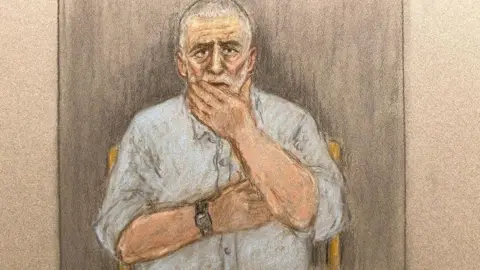
For someone who's forfeited almost 40 years of his life due to a crime he had no involvement in, Peter Sullivan strikes a unusually positive tone.
In our conversation last month, for what was his first interview since being released from prison in May, he was upbeat and eagerly anticipating getting to Anfield to watch Liverpool play for the first time since he was taken into custody in 1986.
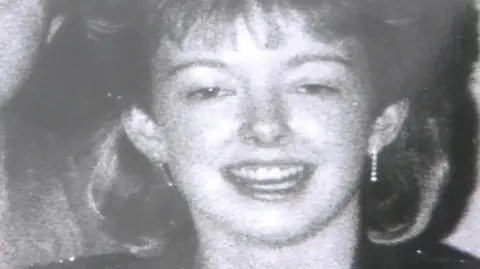
That was the year of the violent killing of Diane Sindall in his birthplace of Birkenhead - an occurrence he said he had limited information regarding because someone turned to him in a pub at the time and said, "reportedly there's been a murder".
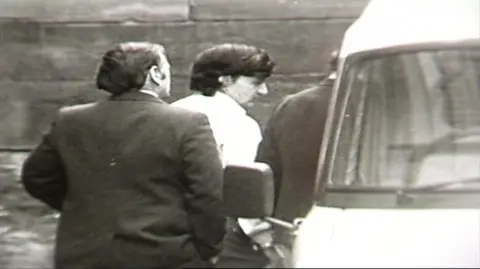
When he was convicted the following year at Liverpool Crown Court - he was condemned to a extended term in some of Britain's toughest category A prisons where he would be tormented by his tabloid nicknames "The Wirral Predator", "River Mersey Murderer" and "Lunar Killer".
Navigating a Transformed World
Ahead of our conversation, he was abundant with tales about how since his release he has had to adapt to a radically changed world.
When he was detained, Margaret Thatcher was in Downing Street, no one had heard of the internet and Europe was still separated by the Iron Curtain.
He recalled watching the fall of the Berlin Wall from a public television in prison.
Mr Sullivan described how trips to the shops now show how "society has evolved" - from trying to understand how self-checkouts operate to realising that "in place of having a cheque book, you've got it on your phone".
Technological Adjustments
His incarceration means he has been ignorant of the way so many facets of everyday life have transformed - similar to someone who has been in hibernation since the 1980s.
"After spending so long in prison and learning there's no DHSS [Department of Health and Social Security, now the Department for Work and Pensions (DWP)] where you can pick up your money - you're thinking, 'Amazing, what's going on here?'"
He now has a smartphone, after learning doctor's appointments need to be scheduled on something he now knows is called an 'application'.
He first became familiar with them when he was traveling on a bus shortly after his release and saw people operating smartphones. He only realised they were phones when he saw someone put one to their ear.
Emotional Impact
Mr Sullivan's 14,000 days in prison have also led to an unavoidable sense of institutionalisation.
He recalled how after his liberation, one morning in his flat he walked back to his bedroom and positioned himself on his bed, because he was automatically waiting for a prison officer to come and confine him into his cell.
"It's required to be at your door at a specific hour, otherwise the officers will discipline you", he said.
"I was just sitting there thinking, 'What am I doing?'"
Demanding Closure
But Mr Sullivan's optimism is mixed with a yearning for answers about how he came to be charged with an infamous murder that he was innocent of, and a perplexity about why he still has not had an expression of regret.
"I've lost everything", he said.
"My liberty was taken, I lost my mother since I've been in prison, I've lost my father.
"It pains me because I couldn't be present for them", he said.
"It's impossible to continue with my life if I can't get an answer off them."
"The sole thing I need, an apology [and to understand] the cause behind they've done this to me", he said.
Police Response
Merseyside Police said "minimal advantage to be gained for a review of this matter today" because of "developments to investigative techniques and improvements in the law over the last 40 years".
The force did refer some of Mr Sullivan's claims to the police watchdog, the Independent Office for Police Conduct (IOPC), who will now examine his claims that officers assaulted him and intimidated to link him to other crimes if he didn't plead guilty to Diane Sindall's murder.
When asked if it would issue an apology, the force did not directly answer the question, but as part of a lengthy statement it said: "The force recognizes that there has been a serious failure of justice in this case".
Future Prospects
Mr Sullivan explained about his basic aspiration - an ambition that he said he had abandoned expectation of being able to realise at some points over his almost forty years behind bars.
"All I want to do now is proceed with my own life and progress as I was before, and live my time out now".
His prospects may be made less challenging by government compensation, paid to victims of judicial errors.
This system is limited at £1.3m, a limit which it is believed his resulting award will get very near.
But the process is not immediate, and it is protracted.
Andrew Malkinson, whose guilty verdict for a rape he did not commit was quashed in 2023, was only granted an provisional award earlier this year.
Convicted criminals who acknowledge their crimes and are released get a housing and some assistance for living expenses. Mr Sullivan, as an innocent man, is not entitled to that help.
And so he is living a simple existence, with his basic aspirations - although many think he is a future wealthy man.
His legal representative, Sarah Myatt, said "no amount that you could say that would be adequate for losing 38 years of your life".


